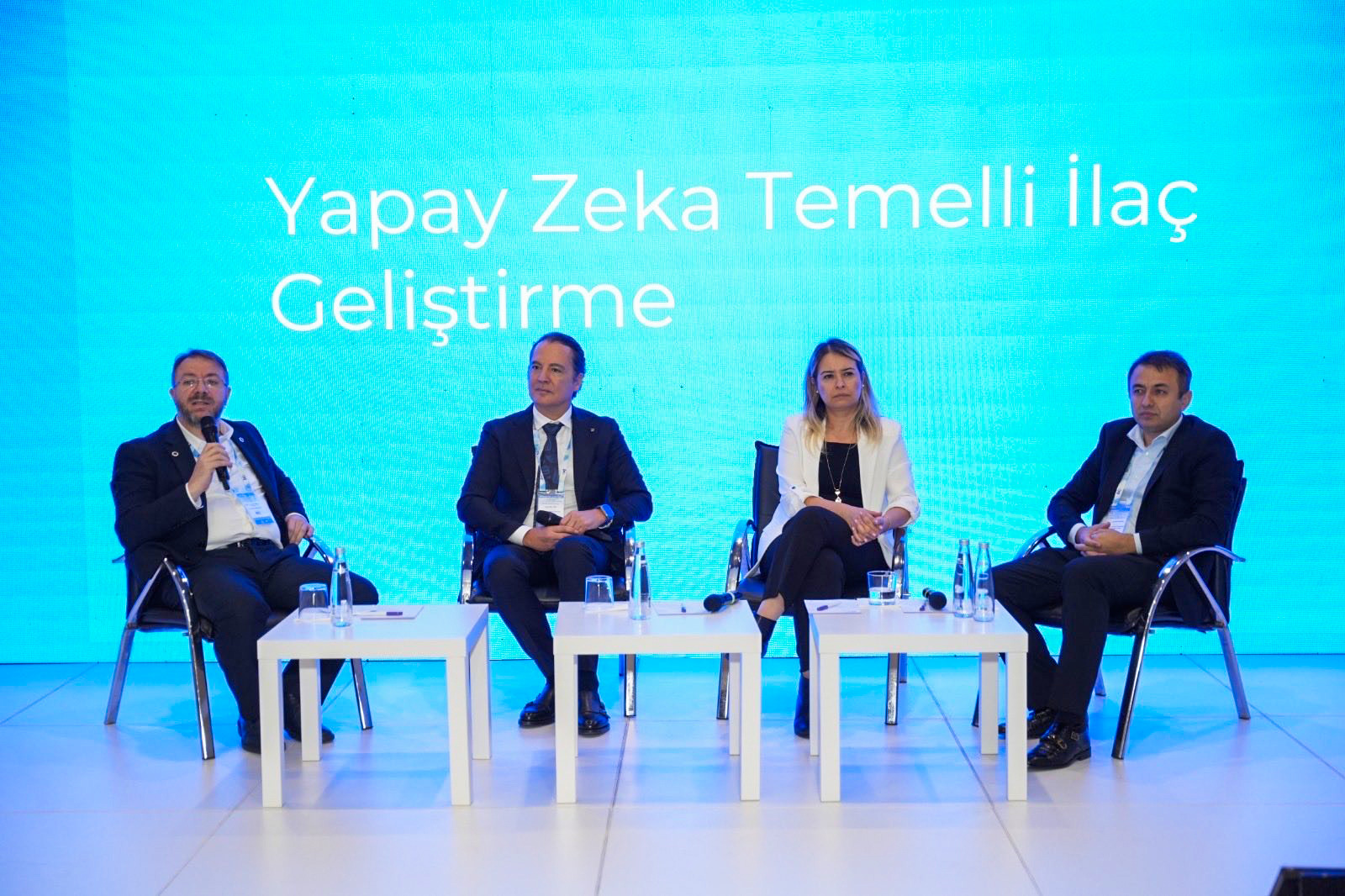
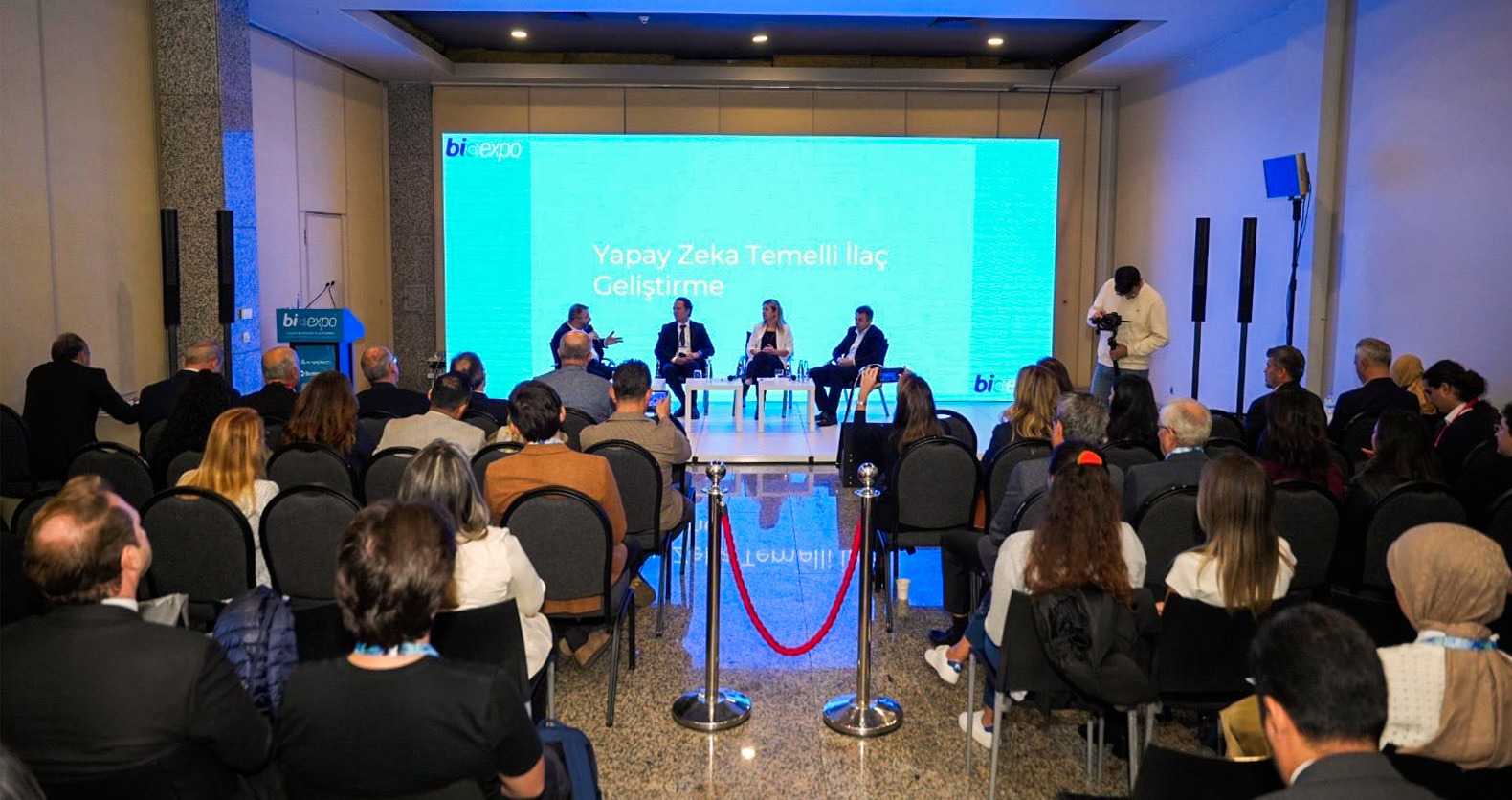
AI-Based Drug Development Panel - Bioexpo2025
Artificial intelligence is no longer just a laboratory tool; it is a force that orchestrates the rhythm of science, transforming every stage from drug development to diagnosis. The Bioexpo Pharmaceutical Technologies and API Symposium held recently vividly revealed the scope of this transformation.
Moderator:
Prof. Dr. Hasan Türkez — Vice Rector of Atatürk University, Scientific Leader of Trustlife
Speakers:
• Cem Öztürk — Sanofi Eurasia Regional President and General Manager of Pharmaceuticals, Member of the Trustlife Advisory Board
• Prof. Dr. Adil Mardinoğlu — KTH Royal Institute of Technology & King’s College London, Scientific Leader of Trustlife
• Dr. Duygu Dağlıkoca — Director of Trustlife Labs Drug R&D Center
The leading figures of the industry discussed the role of artificial intelligence in health data analysis, its advantages in speed and cost for drug development, and the future of personalized medicine.
From Data to Medicine: The Anatomy of 1 Billion Data Points
Studies led by Trustlife Scientific Leader Prof. Dr. Adil Mardinoğlu consider the human body as a multilayered structure, aiming to create a “holistic biological data map” by analyzing each layer in detail.
Approximately one billion data points are collected per individual, ranging from genomic sequencing and real-time data from wearable devices to imaging results, electronic health records, nutritional habits, and environmental factors.
“Such a massive dataset can only gain meaning under the guidance of artificial intelligence. Our approach directs AI to ask the right questions through a biology-first perspective.” — Prof. Dr. Adil Mardinoğlu
This approach not only deciphers the biological mechanisms of diseases but also lays the foundation for a data-driven and personalized understanding that redefines health itself.
Personalized Medicine: Similar Genes, Different Diseases
One of the scientific focal points of the panel was how individual differences are creating a new paradigm in medicine.
Mardinoğlu emphasized that although human genetics appear highly similar on the surface, individuals can exhibit very different responses in disease processes. Healthy individuals are about 99% genetically similar, yet this balance shifts dramatically when illness occurs.
For instance, among liver cancer patients, at least four distinct biological subgroups have been identified. A treatment effective for one group can cause adverse effects in another. “We must now treat not every patient, but every biological profile. Artificial intelligence is one of the most powerful tools to help us understand these differences.”
Redefining Drug Development
Another major theme emphasized in the panel was the transformative power of AI in drug development processes.
“When you create a digital twin of a liver, you can test a drug’s effects without any risk. This is revolutionary both ethically and economically.” — Cem Öztürk, Sanofi Eurasia Regional President and General Manager of Pharmaceuticals, Member of the Trustlife Advisory Board
According to Cem Öztürk, the development cost of a single biological drug can reach up to 20 billion euros.
In the global pharmaceutical market, 20% of the $1.5 trillion volume is allocated to R&D, and 60% of that to clinical research.
Artificial intelligence has the potential to fundamentally change this picture:
• Shortens development time by 20–25%,
• Reduces costs by about 15%,
• Creates digital twins of organs, reducing the need for human subjects in drug trials,
• Significantly shortens the diagnosis process for rare diseases, which can take up to 8 years.
Formula for Success: Collaboration Between Data and People
Dr. Duygu Dağlıkoca, Director of the Trustlife Labs Drug R&D Center, shared the key elements necessary for the sustainable progress of AI in healthcare.
The success of AI-driven transformation in healthcare depends not only on technology but also on the right data, qualified human resources, and a strong collaboration ecosystem that supports it.
According to Dr. Dağlıkoca, the five pillars forming the foundation of this transformation are as follows:
1. Accurate and comprehensive data
2. Multidisciplinary human resources
3. Sufficient funding
4. Strong regulation and infrastructure
5. Public-private cooperation and international partnerships
Emphasizing that the infrastructure supporting this ecosystem in Türkiye has been rapidly strengthening in recent years, Dr. Dağlıkoca noted that TÜSEB- and TÜBİTAK-supported database projects have begun to form a vital foundation for local research.
“We cannot progress without funding; however, without the right data and interdisciplinary talent, funding loses its meaning. We must build the ecosystem together.” — Dr. Duygu Dağlıkoca
At Trustlife, we also pursue this vision through a holistic R&D approach that strengthens data quality, human capital, and collaboration networks.
Towards 2030: Five New Drugs, A Renewed Health Ecosystem
In the visionary section of the panel, highly concrete goals for 2030 were shared:
• Delivery of five different drugs developed under the Trustlife umbrella to patients by 2030,
• Standard treatment protocols based on AI analyses instead of solely physician opinions,
• Progress in immune system regeneration and anti-aging applications,
• Establishment of local health databases specific to Turkish patients,
• Generation of 70% of innovative drug data by artificial intelligence,
These goals redefine not only drug development but also how knowledge is produced, processed, and transformed into societal value.